Start with a contribution, not a topic
The journal accepts original scholarship in English or French across law and society. Write two sentences before polishing the manuscript: the question your paper answers, and what readers can understand differently after reading it. A broad subject such as access to justice is not yet a research question.
This preflight is an editorial preparation method. The publisher’s current instructions govern submission. Do not import word limits, citation conventions or file requirements from an old bulletin or a different journal.
A usable file-by-file preflight
- Create a file list: manuscript, title information where requested, figures, tables, supplementary material and any declarations. Compare it with the live submission instructions.
- Check that the research question, material, method and contribution can be found in the abstract and opening pages. Define the population or documents actually studied.
- Verify every reference against the publication itself. Open each DOI or publisher record, check the author, year and page, and ensure each in-text reference appears in the list.
- Review author-identifying passages and file metadata against the journal’s review requirements. Do not remove material blindly: follow the current anonymisation instructions.
- Confirm permissions, accessible figure descriptions and disclosure of relevant funding, interests and research ethics. Ask the editorial office about a requirement that is unclear.
- Inspect every supplementary file as a reader would. Cambridge says these files will not be copyedited or typeset; send the finished version rather than notes awaiting later cleanup.
- Follow the submission-system link on the publisher’s journal page. Its account is separate from Cambridge Core. Save the receipt and final files after submitting; this site does not receive manuscripts.
Worked preflight: a hypothetical study
Example only: a researcher compares publicly available tribunal decisions to examine how reasons describe barriers to participation. This is not a completed research project or a claimed journal submission.
| Question | How do the selected decisions describe a participation barrier, and how does that description shape the reasons? |
|---|---|
| Scope | Specify the tribunal, period, inclusion criteria and missing decisions; do not call the corpus all Canadian decisions. |
| Method | Describe the coding categories, how disagreements were resolved and how passages can be located. |
| Contribution | Explain what the comparison reveals beyond listing individual outcomes. |
| Release check | Confirm references, permissions, relevant declarations and the latest submission requirements before uploading. |
If AI tools were used
Cambridge distinguishes minimal spelling or formatting help from generating text or images, translating, or analysing data. For substantive uses it asks authors to describe the tool, dates and purpose in the appropriate part of the manuscript. Authors remain responsible for accuracy and references; an AI tool cannot be listed as an author.
Keep a simple record during preparation: tool and version; dates; task; material supplied; changes accepted; checks performed. Place the disclosure where the publisher requests it. Do not claim that a generated citation was verified until you have opened the source.
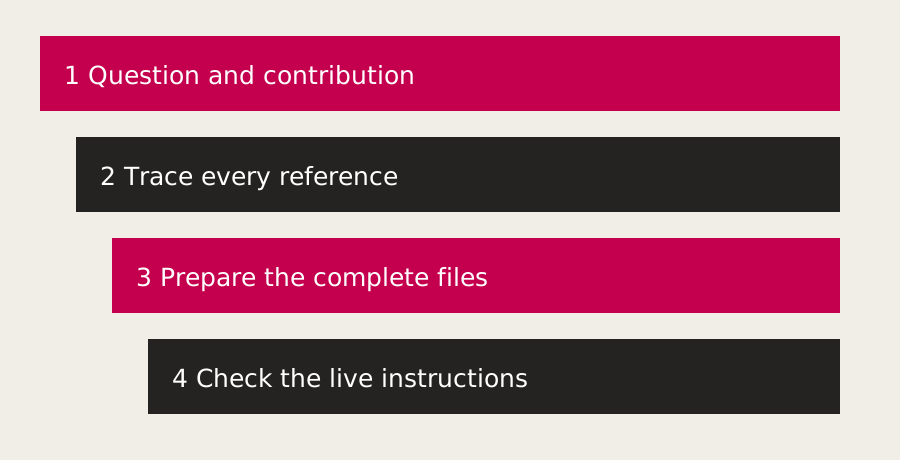
Move from a precise contribution to verified references, complete files and the publisher’s current submission instructions.