A document’s filename is not its legal status
Several recovered documents look authoritative but describe different stages. The file named CLSAcurrentbylaws reproduces the older rules adopted in 1986 and amended in 1992, 1997 and 1999; its normalised English text matches the separate 1999Final copy. The French 1999Final is a language version, not a new reform. Neither the word current in an old filename nor a recent archive capture proves that these rules govern today.
The first page of the eight-page 2007 proposal says it was for approval in 2008. That label establishes an intention, not the outcome of a vote. A later document is needed to connect a proposal to an adopted text. This guide teaches documentary reading, not how to incorporate an organisation or determine present legal compliance.
Read the 2015 transition package as a sequence
| Letter — physical pages 1–2 | Eric Reiter’s letter is dated 25 May 2015 and asks members to consider the transition at the Ottawa AGM on 4 June. It explains the proposed process. |
|---|---|
| Resolution form — page 3 | The form carries 4 June 2015 in its text but leaves certification date/signature fields blank. It is not, by itself, a signed record that a vote occurred. |
| Schedule A — page 4 | Draft content for Articles of Continuance identifies the corporation and purposes. The text is not the issued certificate. |
| Schedule B — pages 5–16 | The by-law attachment starts with PROPOSAL; section 48 on page 16 links entry into force to issuance of Articles of Continuance. |
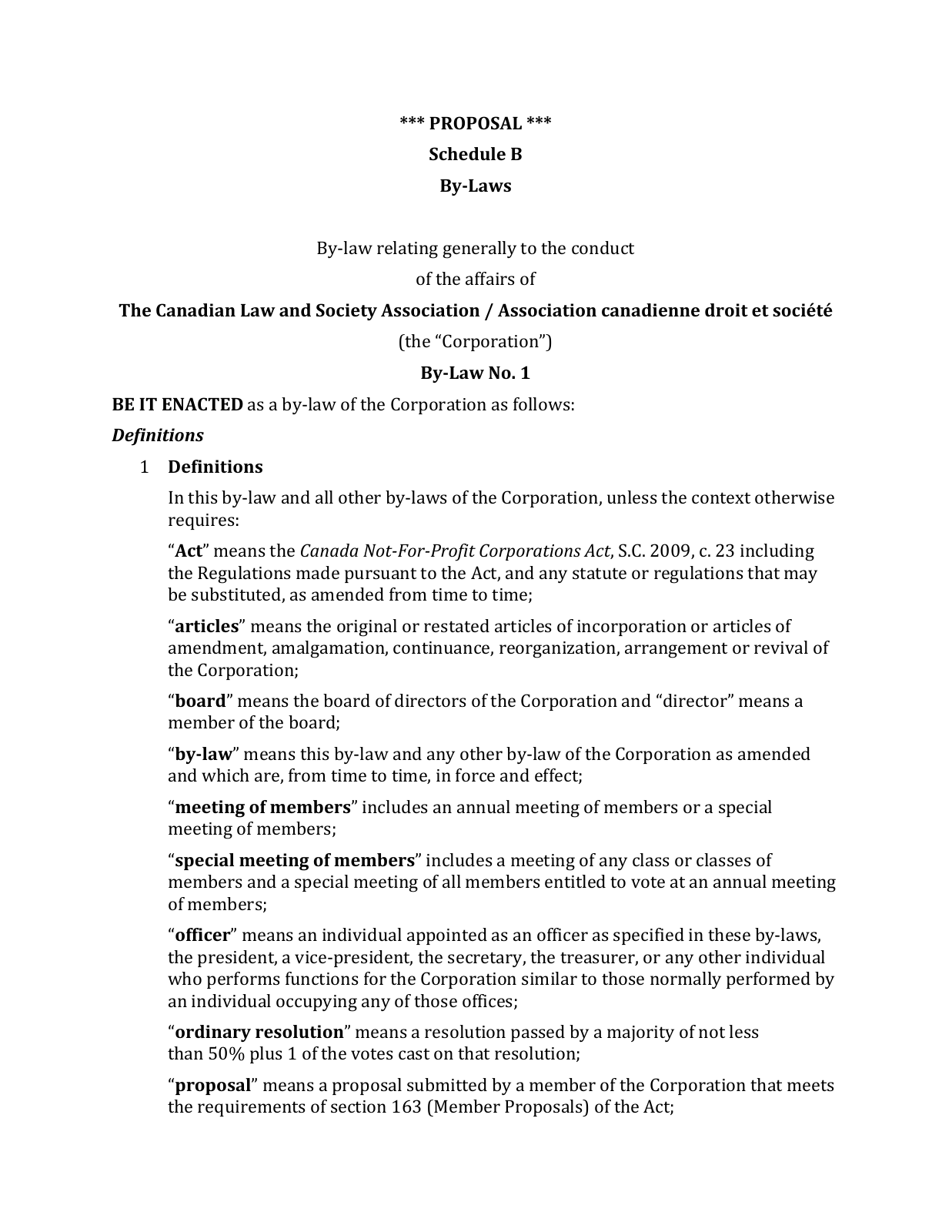
Schedule B is a proposed By-Law No. 1. Its appearance does not prove adoption or the effective date.
Connect versions without merging their dates
The Association’s separately published by-laws state adoption on 4 June 2015 and entry into force on 15 June 2015. Preserve these two dates and cite that adopted text, rather than turning the package’s draft into the final rule. Its existence does not supply the missing signed resolution or government-issued certificate. For any current operational question, consult the latest published version and the responsible authority.
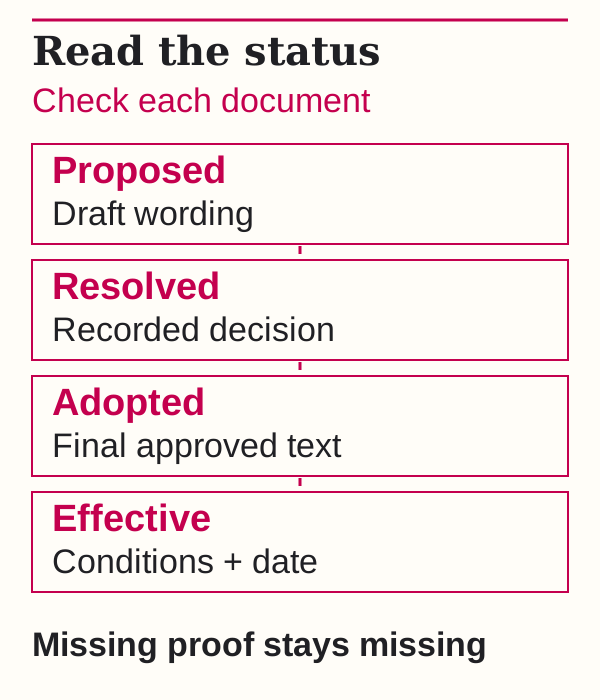
25 May letter; 4 June date in the draft resolution; separate adopted by-laws state 4 June adoption and 15 June effect. The signed resolution and issued certificate are not supplied by the draft package.
Minutes: distinguish discussion from decision
The recovered combined file has 2012 AGM material, a financial report and the board meeting of 26 January 2013, which begins on physical page 11. Do not give every page a single date based on its filename. On physical page 15, discussion of online voting was postponed to the AGM. The same page records further exploration of a possible response to Trinity Western and says no vote was taken on a letter concerning Ed Schmidt. A discussion topic, delegated exploration and adopted policy are different outcomes.
A five-step status check
- Name the document type and find its date within the document. Record page-level dates in combined files.
- Copy explicit status words and inspect whether signatures, dates or approval fields are completed.
- Find the decision body, exact recorded action and conditions attached to effect. Mark missing links.
- Compare with the separately issued or published final text. Do not silently merge a changed section from another version.
- Write a narrow conclusion and the unresolved question. Distinguish historical reading from a present operational decision.
Worked record and reusable template
| Question | Does the 25 May 2015 packet alone establish operative By-Law No. 1? |
|---|---|
| Source and locator | Transition package, pages 3, 5 and 16; separately published by-laws heading. |
| Observed status | Blank certification fields; PROPOSAL on page 5; conditional effect in section 48. |
| Conclusion | The packet documents a proposed transition. The separate published text supplies adoption/effective dates; the packet alone does not prove issuance or current compliance. |
| Next source needed | For the full institutional trail: the signed resolution and issued continuance instrument. Do not invent either. |
| Copy for your own record | Question / title-version / internal date / physical page / type-status / completed fields / decision body-action / effective condition / corroborating final text / gap / conclusion. |
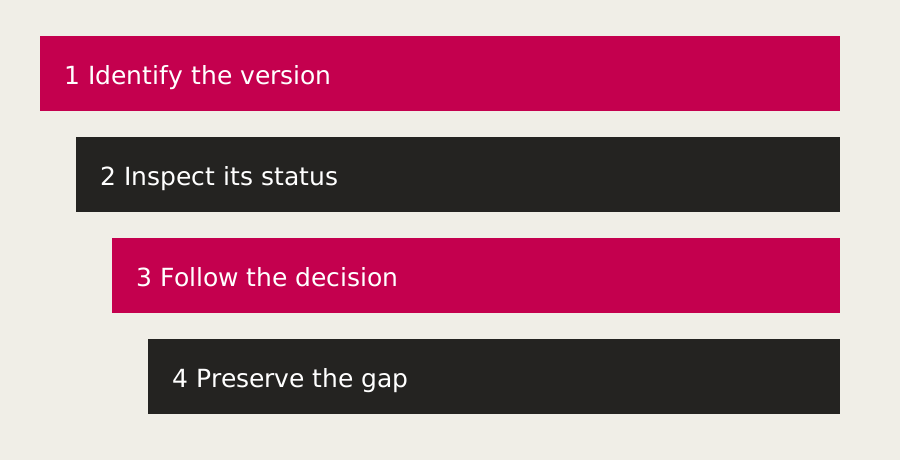
Identify the version → Inspect its status → Follow the decision → Preserve the gap