Reading note · CLSA / ACDS
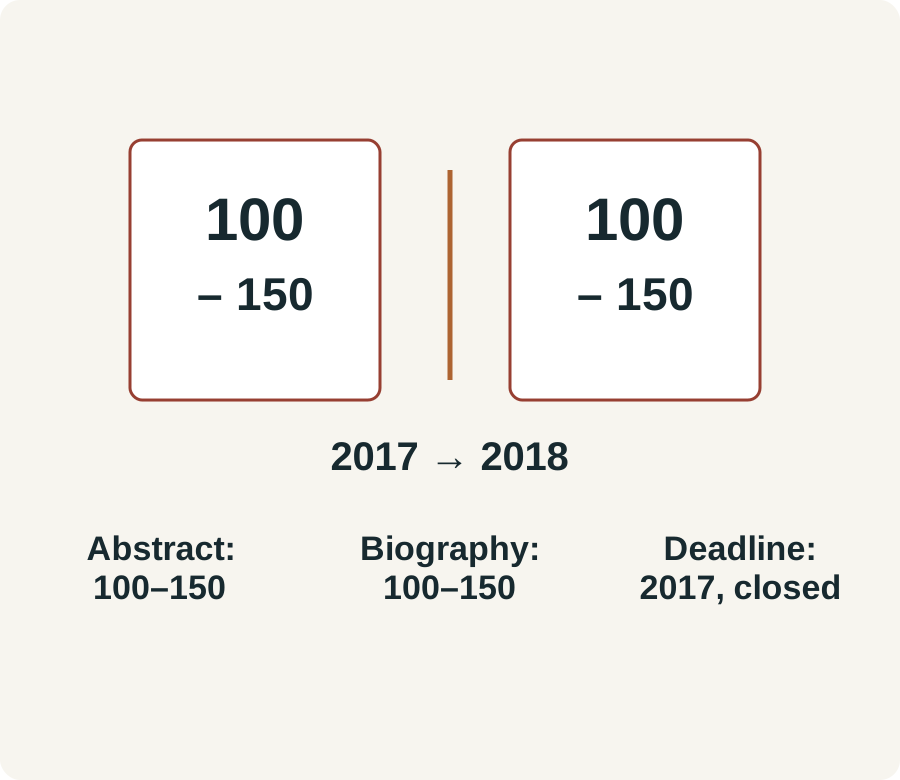
The symposium was planned for 26–27 January 2018 in Oshawa, with the mid-winter meeting on 28 January. The call asked for 100–150-word abstracts and biographies by 6 October 2017. Its two linked approaches study technological change through law and law itself as a technology of (in)justice. Use that distinction to frame a research question; the submission deadline is past.
A practical evidence note
Record the person or item, the source section, its date, and whether it is a plan, report or decision. Locate a later publication or record before making a present-day claim. Do not infer missing results from a name on an agenda.
1 sections of text
Source-language text, including both languages where the original is bilingual. Page numbering follows the obtained document.
Text section 1
Call for Paper and Panel Proposals Technologies of Justice Faculty of Social Science and Humanities University of Ontario Institute of Technology Oshawa Ontario January 26-28 2018 We invite proposals (100-150 words) for papers and panels that engage the theme of Technologies of Justice from a range of theoretical and methodological perspectives. We welcome studies of how law is coming to grips with technological change; moreover, we encourage scholarly work concerned with law itself as technology of (in)justice. Thus, the conference offers opportunities to explore what it means to do justice and to addresses innovations and challenges in the way justice is done. The symposium will take place Friday January 26th and Saturday 27th in downtown Oshawa, and the annual mid-winter meeting of the Canadian Law & Society Association is scheduled for the morning of Sunday January 28th. Please email 100-150 word paper abstracts and panel proposals (along with 100-150 word bios of presenters) to technologiesofjustice@uoit.ca Deadline for submission is Friday October 6th 2017. *** Appel à communications Technologies de la justice Faculté des sciences sociales et humaines Institut universitaire de technologie de l’Ontario Oshawa, Ontario 26 au 28 janvier 2018 Nous vous invitons à soumettre des propositions de communications et de panels (100 à 150 mots) qui abordent le thème des technologies de la justice à partir d'une gamme de points de vue théoriques et méthodologiques. Nous accueillons des réflexions portant sur la façon dont la loi s'attaque aux changements technologiques, ainsi sur la loi elle-même en tant que technologie de (l’in)justice. Ainsi, le colloque offrira des occasions d'explorer ce que cela signifie que de « faire » justice et d'aborder les innovations et les défis dans la manière dont la justice est menée. Le colloque aura lieu les vendredi 26 et samedi 27 janvier au centre-ville d'Oshawa, et la réunion annuelle de mi-hiver de l'Association canadienne droit et société est prévue pour l’avant-midi du dimanche 28 janvier. Veuillez faire parvenir votre proposition de communication ou de panel de 100 à 150 mots (ainsi qu’une biographie de 100 à 150 mots) à technologyofjustice@uoit.ca. La date limite de soumission est le vendredi 6 octobre 2017.
Sources & further reading
https://www.acds-clsa.ca/uploads/1/2/5/5/125505866/call_for_paper_and_panel_proposals_technologies_of_justice_bilingual_september_12_2017_2.docx ↗https://www.acds-clsa.ca/oshawa-2018.html ↗https://www.acds-clsa.ca/oshawa-2018-fr.html ↗Check two separate word budgets against a closed historical call
The Technologies of Justice call is a historical document, with a submission deadline of 6 October 2017. It is not accepting proposals now. Its separate 100–150-word requirements for the proposal and biography make a useful editing exercise; do not add their lengths together.
- Copy each requirement into its own row before drafting. Keep the original call and its date beside the row.
- Write a question, a proposed method, the intended contribution and a boundary. Distinguish work you propose to do from research already completed.
- Count the abstract and biography separately. A word processor may treat punctuation differently, so leave room within the permitted range and check the submission system for a real current call.
Fictional abstract: 110 whitespace-separated words
This proposed paper asks how the layout of a public online hearing notice shapes the steps a reader must take to identify a hearing date. It would compare two invented notices that contain the same information but place the date, access instructions and contact details differently. The exercise would document the order of information, ambiguous labels and missing explanations, without recruiting participants or collecting personal data. Its contribution would be a transparent comparison worksheet rather than a claim that one layout improves access to justice. The discussion would distinguish a design observation from evidence of reader comprehension and identify the further research needed before making claims about actual court users.
This is a teaching proposal, not a completed study or an accepted presentation. The question, comparison and limitation are explicit. No interviews, findings or real court-user outcomes are invented. A biography is deliberately not supplied: its facts must come from the actual contributor, within its own separate limit.
Review sheet: exact call/date __; abstract count __; biography count __; proposed/completed claims checked __; missing author facts __; current submission status __. For this historical call, the last field is closed. A satisfactory exercise meets both budgets without pretending to submit to 2018.
Source: www.acds-clsa.ca.